About the Client
Rosatom is a Russian state-owned corporation specializing in nuclear energy. It brings together more than 400 companies and organizations across the nuclear industry.
The Challenge
Write articles about life in Russia’s nuclear industry towns for Luch magazine. This involved finding interesting local people to interview and talking to them about their hobbies and businesses.

Found People to Interview
The magazine’s editorial team comes up with topics for each issue and offers them to writers. I looked through the list and spotted a story about musicians from Russia’s nuclear industry towns. It caught my interest, so I took it on.
I researched music festivals organized by Rosatom and concerts held in these towns. I found members of local bands and then started looking into other musicians they knew. In the end, I put together a list of 20 bands, all with their own unique style and something interesting to offer. I reached out to the five most promising musicians and waited for their replies.
Interviewed the Musicians
Of the five bands I reached out to, three responded — and all three were at the top of my personal ranking. I started preparing for the interviews: reading about their performances, listening to their music, looking for previous interviews, and checking their social media accounts.
We arranged the first call almost immediately, with the lead singer of Filtr, a band from Balakovo. He was a big, bearded guy who looked like a Viking, but turned out to be incredibly warm-hearted and funny. I asked him about his music and what life was like in a nuclear industry town. I genuinely enjoyed talking to him. We didn't just stick to the interview questions — we also discussed why everyone in Balakovo seemed to love Korol i Shut, while Grazhdanskaya Oborona was more popular in Omsk.

The second call was with a musician from Fort Ros. Our conversation brought a sharp contrast to the article. Instead of cheerful stories about life in nuclear industry towns, we talked about barbed wire surrounding the town and armed soldiers at checkpoints. Despite the serious topics, we had a lovely chat, and I filled almost four pages with notes during our hour-long conversation.
To make the article feel complete, I needed just one more interview — with the lead singer of YANEYA. We'd agreed to talk, but couldn't find a time that worked for both of us. The deadline was getting closer, and a call just wasn't happening. So I sent him a list of questions and suggested answering them with voice messages instead. It worked perfectly: he recorded his answers while driving home from work. All that was left was to weave the stories from all three interviews into one article.
Wrote and Finalized the Article
Putting the article together wasn’t difficult: I took notes during the interviews, so by the end I already had a solid foundation. I just needed to adjust the style, keep the most interesting parts, and place the illustrations. The whole layout process took about two hours.
The final piece had a strong rock-and-roll feel. I asked the designer to match that mood: put a person in the foreground striking a pose like Angus Young from AC/DC, with a stage in the background inspired by Rammstein concerts.
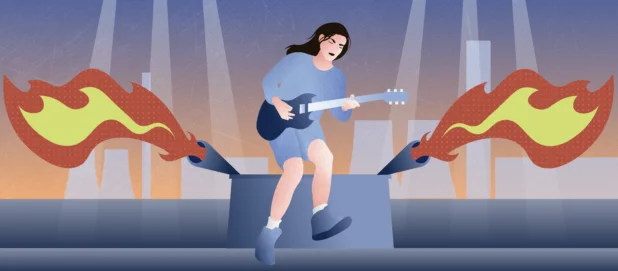
How a Nuclear Power Plant Fuels Rock Musicians: 3 Bands from Russia’s Nuclear Industry Towns
Took On Another Article and Found People to Interview
I was offered another article, this time about food and restaurants in Russia’s nuclear industry towns. The topic immediately caught my interest because I love cooking and exploring restaurant culture. I always keep an eye on which restaurants earn Michelin stars and follow chefs from different cities.
For this article, I needed to find restaurant owners in nuclear industry towns. That meant browsing dozens of restaurant websites, reading reviews, and checking social media accounts — across at least 20 towns. This kind of tedious research would have taken me an entire day, so I delegated it to my assistant, Bogdan. He could handle it in just a couple of hours.
I gave Bogdan three criteria for choosing restaurants:
High-quality food;
An attractive interior and overall look;
It had to be a proper restaurant, not a café, coffee shop, or casual eatery.
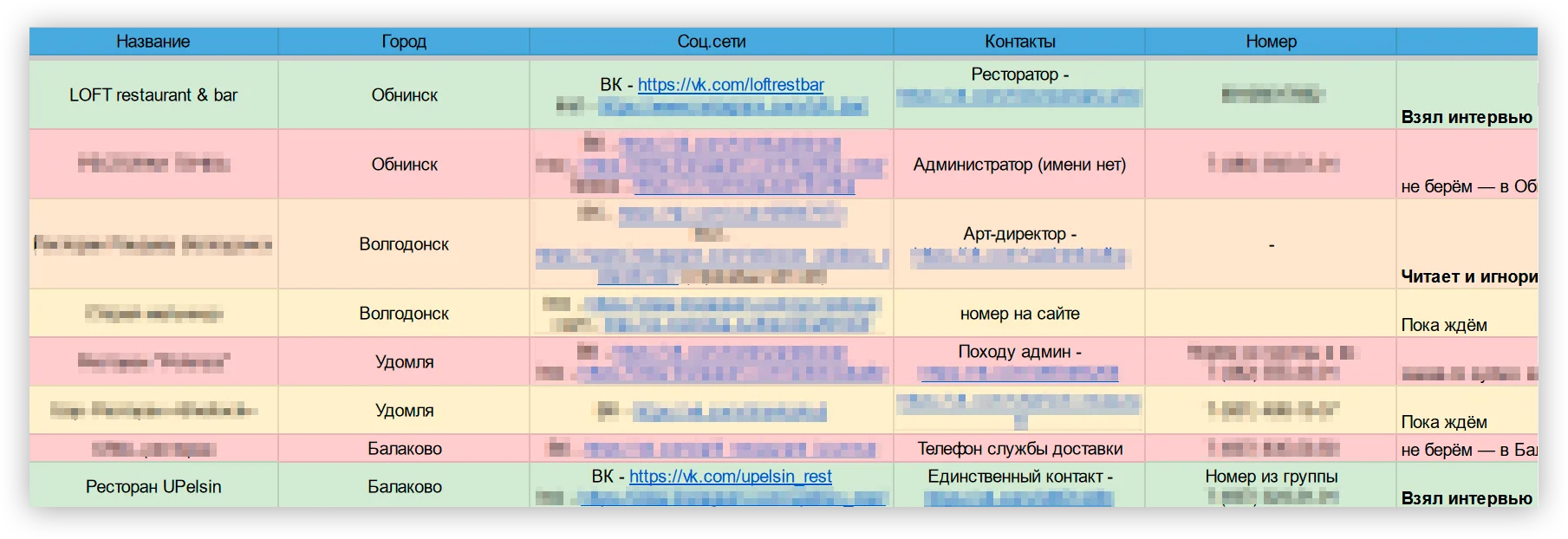
The list included everything from fine dining restaurants to small, family-run places. I started reaching out to them — and got nothing but silence. I was used to having half or even more of the people I contacted ignore my messages or turn down interview requests. But this time, literally everyone ignored me.
I started adding more restaurants to the list and calling the ones I'd already contacted. Some didn't pick up, others refused or asked me to call back later. A few times, I got my hopes up when someone agreed to an interview. But by the next day, they'd changed their mind.
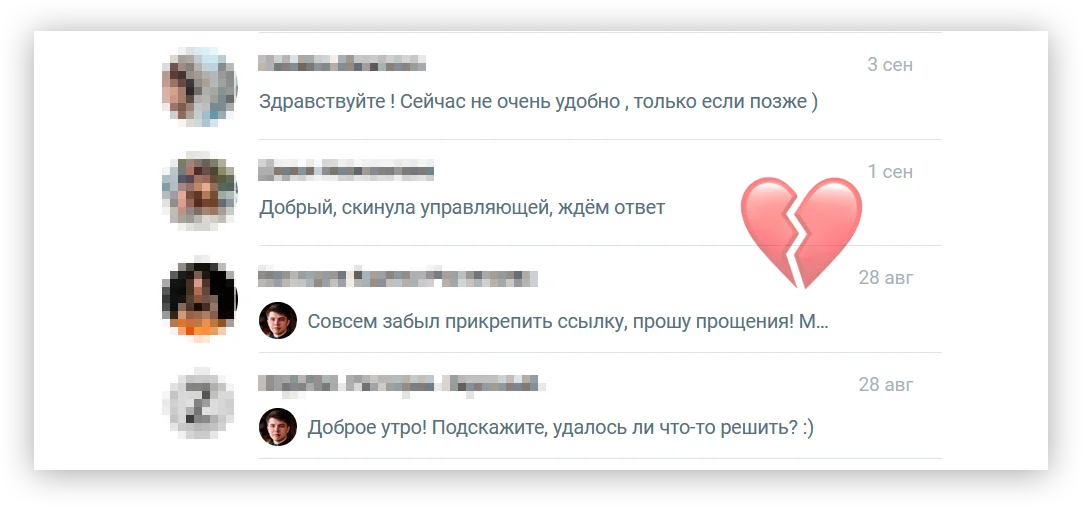
I contacted the editor and asked to push back the deadline. There was nothing to publish yet because no one had agreed to an interview. But I wasn't ready to give up. I kept calling and messaging restaurant owners every single day. Then, out of nowhere, I got lucky. On Saturday, two restaurant owners I'd contacted several days earlier finally replied. Things were moving again.
Interviewed the Restaurant Owners
One of the restaurant owners, Sergey, asked if we could switch to Telegram because it was more convenient for him. Ten minutes later, I jumped into a taxi so I could get home and call him as soon as possible. We ended up talking for a full hour. The conversation was so inspiring that I even started thinking about opening a restaurant of my own.
I scheduled the second interview with another restaurant owner, Ilya, for Monday. He was in a hurry and asked me to keep it under 30 minutes. We had to discuss the restaurant business at lightning speed — it felt like watching a video at 1.5x speed. But somehow, we managed to gather several pages of material in just half an hour. Talk about efficiency!
I still needed one more person to interview to make the article complete. There was one restaurant I'd contacted a few weeks earlier that I couldn't get out of my head. I went through its social media page, figured out who the owner was from the comments, and sent her a direct message. We arranged an interview within minutes. We had a great conversation, and I gathered plenty of interesting details for the article.
To finish the article as quickly as possible, I edited each interview right after the call ended. Once the final interview was done, all I had to do was polish my notes, and the article was ready. The result was pretty ironic: I ended up writing about some really impressive restaurant owners, while the owners of more average places had simply ignored me.