About the Client
Trustpool is a cryptocurrency mining pool that ranks among the world's top 10 for mining Bitcoin and other cryptocurrencies.
The Challenge
Develop and launch a special project to attract new customers and partners while generating media buzz.
Attracting Miners and Partners Is Expensive and Time-Consuming
I work as a marketer at Trustpool, a mining pool that's been helping people mine cryptocurrency since 2019. My job is to attract new customers to the pool and build brand awareness within the mining industry.
It's not always easy — miners are reluctant to switch pools. If someone's already mining cryptocurrency with another pool and everything works fine, convincing them to give Trustpool a try can be tricky. Our usual approach is to attract people to our Telegram channel, introduce them to Trustpool, and gradually encourage them to connect their equipment to our pool. It's a long journey, advertising costs a fortune, and sometimes even getting someone to follow the channel is a challenge.
We also needed a good reason to start conversations with potential partners. We wanted to work with equipment suppliers, mining hosting providers, and other companies in the industry. But people were understandably cautious when we approached them with something vague like, "Let's get to know each other and do something together." We needed to offer them something interesting right away and show how we could benefit each other.
That's when I realized I needed to get creative and come up with one idea that could tackle all these challenges at once.
Came Up with a Major Special Project to Tackle Our Marketing Challenges
My idea was to create a comprehensive mining market report covering the previous year. I wanted to explore how the mining industry had changed in Russia and worldwide throughout 2025, and where the market stood heading into 2026. The plan was to gather research, interview industry experts, and publish a report that people would actually want to read and discuss. I hoped this one project could help us achieve several goals at once:
Reduce the cost of attracting new followers. I believed a comprehensive market report would generate much more interest than standard ads. That meant we could potentially attract more followers for the same advertising budget, bringing down our cost per follower.
Build a contact list for future campaigns. I planned to distribute the full report through a Telegram bot that would check whether users had subscribed to our channel. This would allow us to stay in touch with readers and gradually introduce them to Trustpool's products.
Earn additional exposure in industry media. I hoped that a report featuring our own data and insights from industry experts would catch the attention of editors, encouraging them to share it with their audiences for free.
Showcase Trustpool's expertise. I wanted equipment suppliers, mining hosting providers, software developers, and miners to see that we understood the industry, kept up with market developments, and could be a valuable business partner.
Connect with potential partners. I thought inviting industry professionals for interviews would be a great way to start conversations. An hour-long interview would give us a chance to get to know each other, discuss the market, and lay the groundwork for future collaborations. Besides, company representatives would probably be more willing to share their expertise in an interview than discuss a vague partnership proposal.
Dug Into Research, Talked to Industry Experts, and Put the Report Together
I optimistically gave myself two weeks to complete the entire project. Spoiler: thanks to loooooooong approval processes with all the interviewees, it ended up taking twice as long. Everything else, though, moved along pretty quickly.
Planned the report's structure. I divided it into six sections: market overview, miner profiles, energy, profitability, regulations, and the year's biggest events. For each section, I outlined what data I needed to find and which experts I should talk to. I wanted to combine research findings with real-world insights from people working in the mining industry.
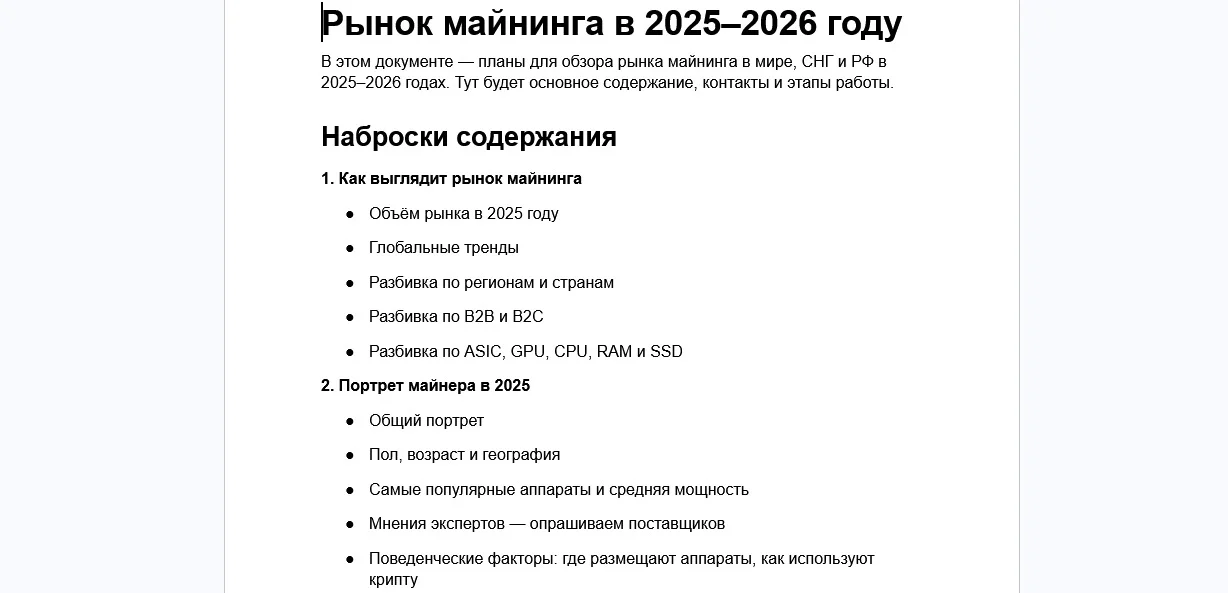
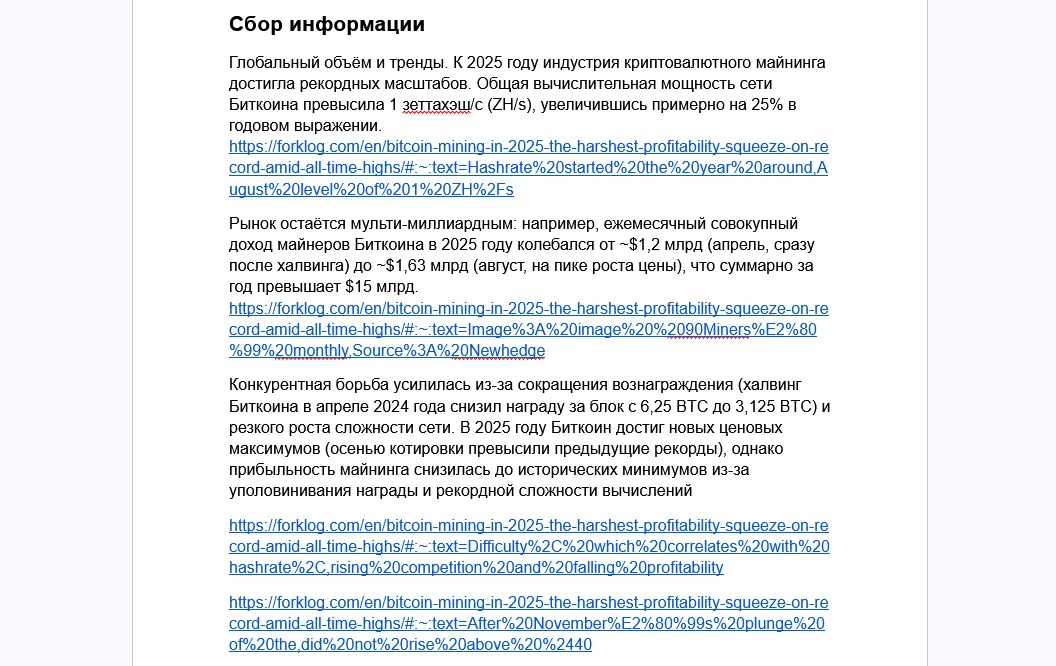
Collected and analyzed research. I delegated my day-to-day tasks to the team and spent about two weeks digging into academic papers and reports from major companies. I used AI to help me find relevant topics and sections in lengthy documents, but I read and fact-checked all the findings myself. I organized everything useful into a draft, sorting the information by section. Over time, it grew into a massive collection of notes that I still had to turn into a clear, easy-to-read report.
Interviewed industry experts and surveyed miners. Together with my colleague Valeria, I looked for people to interview: company founders, CEOs, and department heads. I found some of them through my contacts in the industry. I conducted 25 interviews, each lasting about an hour, with representatives from 14 medium-sized and 11 large companies. At the same time, we surveyed 2,500 Trustpool customers to understand how miners themselves were experiencing the changes in the market.
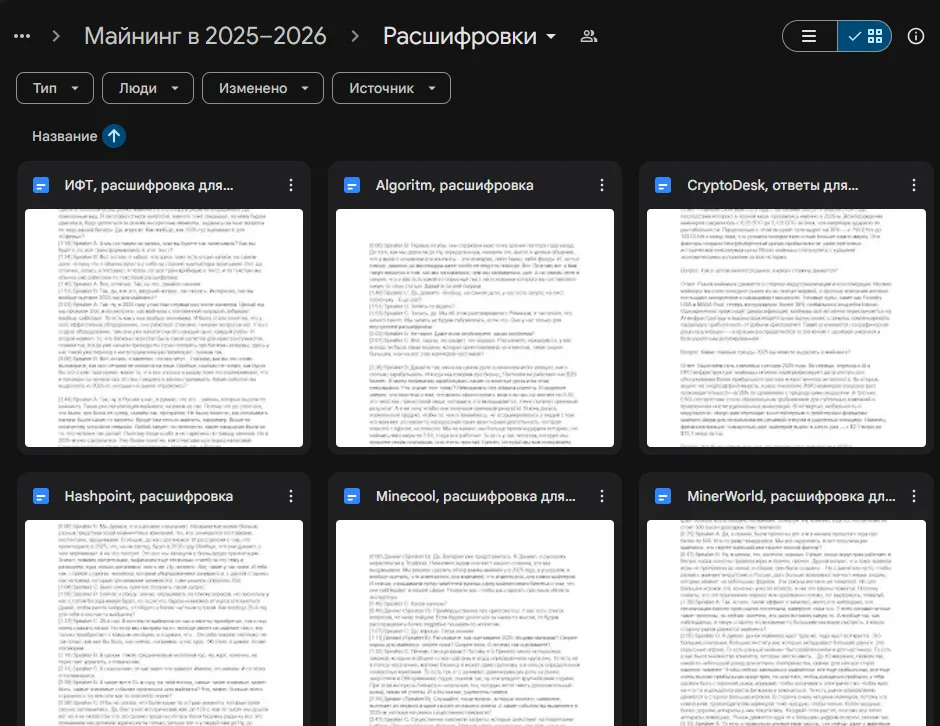
Wrote the report and prepared the layout. I structured the report from the big picture down to the details, compared research findings with insights from industry professionals, and added expert commentary. I also ran some calculations myself. For example, I calculated the maximum electricity price at which mining equipment with different energy efficiency levels could remain profitable, using several Bitcoin price scenarios. I built a prototype in Google Slides, complete with charts and tables, got the expert quotes approved, and handed the layout over to the designer. The final report was 102 pages long.
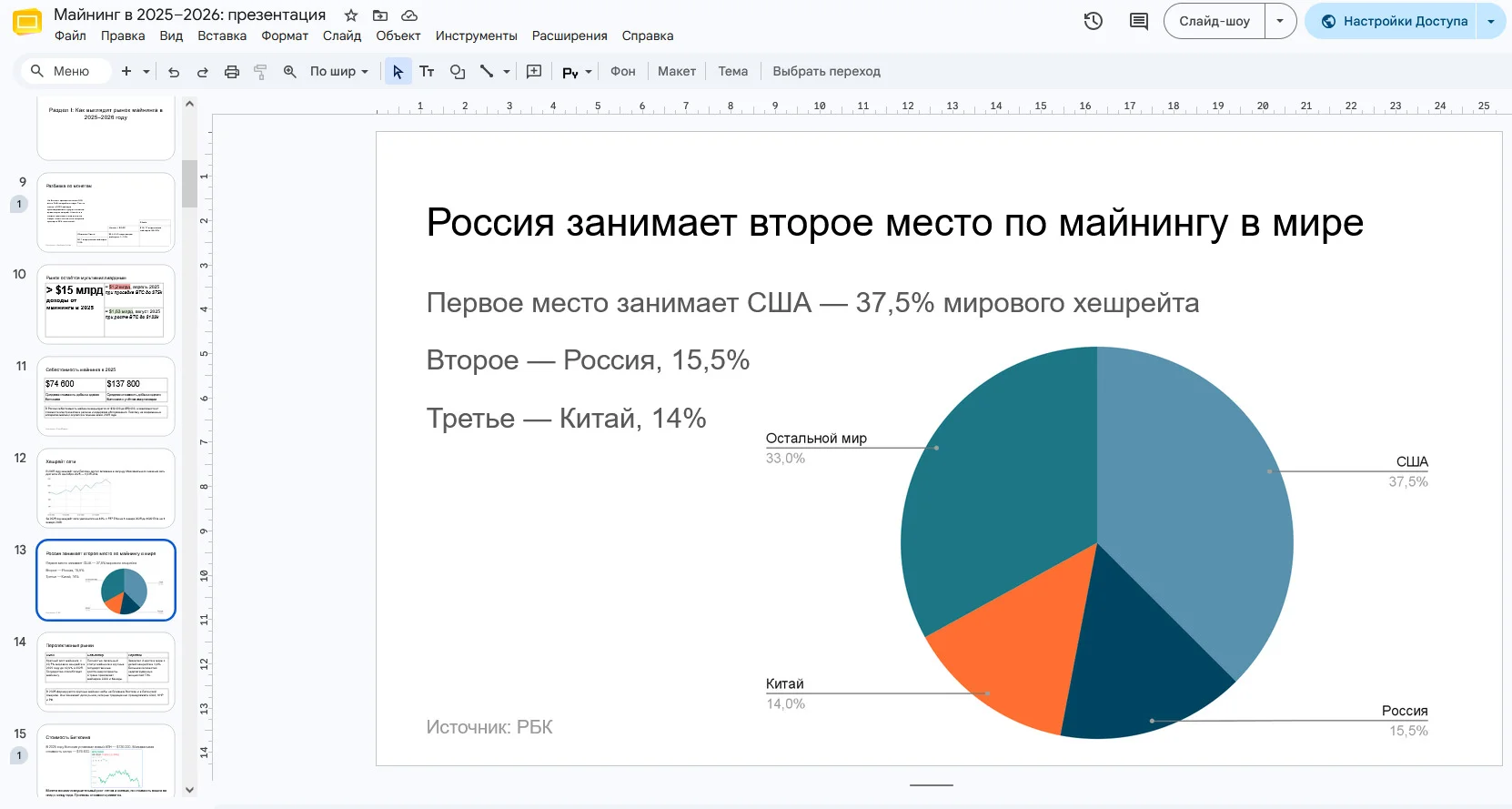
Our designer, Nikita, handled the final layout. I gave him the prototype showing how I wanted the data to be presented, and he took care of the typography, charts, and tables, turning everything into a finished PDF.
Spread the Word About the Project Everywhere
We built our funnel around a Telegram bot. We promoted the report through our social media channels and blogs, published posts on partner platforms and expert channels, and ran ads to spread the word. Every link led to the same bot, which gave users access to the full report in exchange for subscribing to our Telegram channel.
Meanwhile, the bot handled several tasks:
Built a contact database for future campaigns. By default, users received three follow-up messages over the first few days after downloading the report.
Required users to subscribe to our Telegram channel before they could access the full report.
Tracked downloads and clicks to help us measure the campaign's performance.
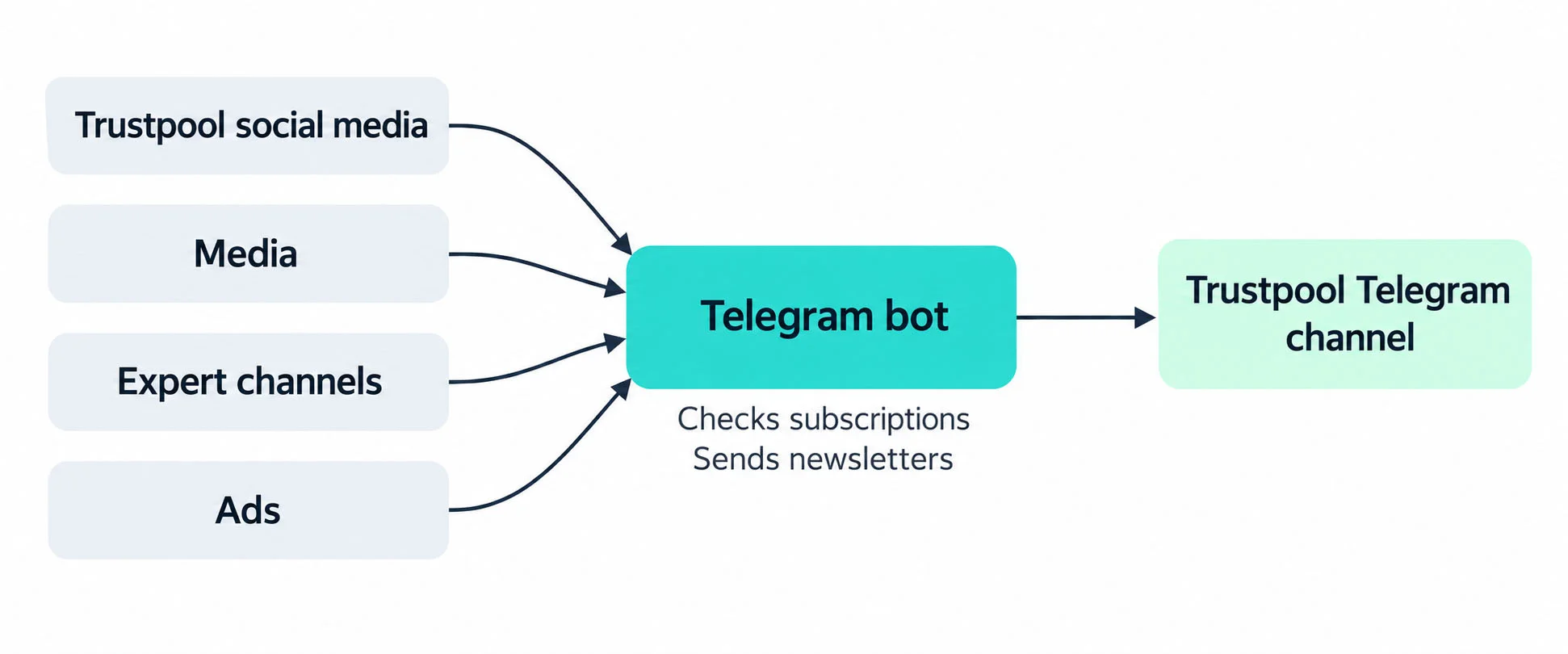
We promoted the report through our own channels and partner platforms, ran paid placements, and launched targeted ads. Together, these publications reached tens of thousands of people.
Not everything worked out as I'd hoped. My hypothesis that an interesting report would help us earn free coverage in new industry media didn't pan out. We got published on two partner platforms where we already had established relationships, but had to pay for the other placements.
It also turned out that many readers were happy with the shorter article. Only around 150 people downloaded the full report. Just a fraction of the audience made it to the bot, even though I'd built the whole distribution strategy around it.
The campaign brought around 1,000 new followers to our Telegram channel. We were also able to track mining pool registrations that came through the full report.
But for me, the most valuable result was the connections we made. We talked to representatives from 25 companies and built a network of contacts we could reach out to with future collaboration ideas.
See the Special Project for Yourself